Archive for May, 2008

Unexpected Absence Explained

Sunday, May 18th, 2008

Just writing to fill in the blanks as to why posts have ceased here for the moment. As one of the only authors at this blog, and with a mass of work piling up elsewhere, I’ve lost any opportunity to continue with my Another Look at An Inconvenient Truth series. However I will be returning to Mongabay soon, and looking at newer stories, focusing on the science behind the climate.

Joshua S. Hill
Another Look at An Inconvenient Truth Part 3

Tuesday, May 6th, 2008

Well, it’s a week after I started this little series and I’m still only part of the way through. Seems that it will take me a little longer than planned to write, but rest safe in the knowledge that that simply means there’s research happening behind the scenes here at Casa de Hill.

The second article published in the delayed September edition of GeoJournal is written by Roy W. Spencer, who serves as a principal research scientist for University of Alabama in Huntsville. He has served as Senior Scientist for Climate Studies at NASA’s Marshall Space Flight Center in Huntsville, Alabama, and according to his Wikipedia article (he is one of the few in GeoJournal’s AIT forum to have a Wikipedia article) “…is skeptical of the scientific consensus that human activity is primarily responsible for global warming.”

So it is not surprising that straight away, in Spencer’s introduction, he notes that “…the following arguments I present will not support the supposed scientific “consensus” that exists on the subject of global warming.”

Naturally, as seems to be the general consensus – excluding those scientists on their high-horse unwilling to come down – Spencer praises the good job that AIT has done in “explaining the basic theory behind manmade greenhouse warming.” However Spencer immediately notes that AIT was single-minded in its view that anthropogenic global warming was the only possibility.

This is the tact that Spencer takes throughout his article, touching upon this undeniable onslaught “Mr. Gore”

Carbon Dioxide’s Evil Plan

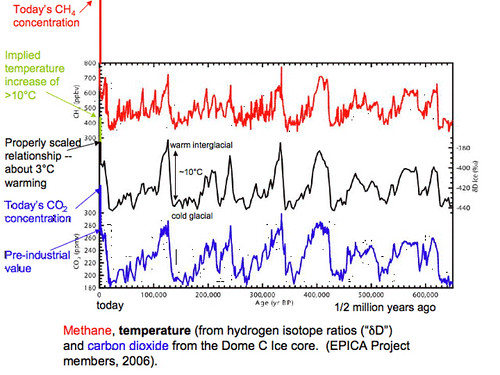
Spencer’s first point of attack harkens back to a point also made by Steig, regarding Gore’s misleading representation of carbon dioxide levels measured in ice-cores from Antarctica, compared to temperatures. Much of what he says mirrors Steig’s arguments, regarding the likelihood that instead of carbon dioxide being directly responsible for temperature increases it may have only acted as an amplifier.

He did make one interesting point though that is worth looking at. It is summed up thus; “The third problem with Mr. Gore’s graph is related to the fact that CO2 is a relatively minor atmospheric greenhouse gas.”

This point of view has often been used to great effect against climate warriors, and for good reason. Consider that out of every 100,000 molecules of air, only 38 are carbon dioxide. Spencer strikes what would appear to be a blow by saying that “if you double or triple a very small fraction, it is still a very small fraction.”AIT2

However, this point of view is somewhat misleading. The simple fact of that matter seems to be that, even though there is a relatively small amount of carbon dioxide in our atmosphere, it is not the overall quantity that matters, but the strength of what is there.

I posed this question on a science forum, as well as to various scientists that I am in contact with. This is the best analogy that came out of it; “Just because I change only 1% of the air in your bedroom to toxic nerve gas does not mean that it will have no effect and you will not be killed. It’s not the overall amount that matters; it’s the effect of the amount which is there.”

Additionally, carbon dioxide is by no means the only greenhouse gas that has increased of late. “CO2 is up more than 30%, CH4 (methane) has more than doubled, N2O (nitrous oxide) is up 15%, tropospheric O3 (ozone) has also increased,” said an expert who preferred to go unnamed. “All of these increases contribute to an enhanced greenhouse effect.”

Spencer then points to the fact that over 90% of our current greenhouse effect is actually not due to any of the toxins we pump in to the air, but water vapor and clouds. He points out then a much ignored point, that it isn’t the direct response of climate to toxins but the feedbacks that are the greatest concern, because we know the least about these.

Individual Extremes

Spencer also points out, as did Steig, that individual events are not the mark of climate change, but rather the overall pattern is; and Gore does have a nasty habit of attributing every nasty weather system to global warming.

The real question that Spencer wants answered is are the natural processes causing these events speeding up, and if they are, are humans to blame? He notes that considerable evidence has built up over the past years suggesting that glaciers have been receding since at least the late 1800’s. Examples such as tree stumps left behind which have been carbon dated to be only a few thousand years old suggest that a relatively recent period existed when glaciers were much smaller than they are now.

He spends the time to look at three specific examples; hurricanes, tornadoes and sea level rise. To hurricanes he points out that individual hurricane’s like Katrina aren’t the big deal, but rather the fact that there was so many that made landfall in the US. To tornadoes he notes that “despite the movie’s suggestion that severe storm and tornado events have increased in frequency, there is no convincing evidence of this.

When he touches on sea level rise though, Spencer seems to once again blur the edges of the facts. He notes that Gore alludes to the possibility that sea levels could rise twenty feet, and says that “even the IPCC is projecting something closer to only one or two feet.” This is a convenient truth, without any of the facts.

Gore was, possibly a little towards the alarmist side of things, suggesting that if the Greenland and Antarctic ice sheets were to melt, we would see a sea level rise of up to 20 feet. However Gore is misleading in alluding to this happening any time soon: Spencer fails to mention this, while quoting the IPCC’s theories for sea level rise for the next decade or so as opposition to this point.

Humans or Nature?

On the home stretch, Spencer asks what he believes to be the key question; “To what extent is our present global warming due to humans?”

It is a good question, and one that is fairly the base of the majority of scientific debate at the moment. He points to “historical records and numerous temperature proxy measurements from around the Northern Hemisphere that suggest our present warmth is not greater than that during the Medieval Warm Period, which peaked around 1,000 years ago.”

He sums up his arguments though, by addressing the fact that AIT blames almost the entirety of the current global warming on humans, where there could be natural influences at play. “I am not claiming that recent warming is entirely natural,” he states. “I am simply disputing the view that it is 100% anthropogenic.”

800px-Northwest_passage

I would be inclined to accept his point of view if it wasn’t for his last blurring of facts to prove his points. A big point in the media and in science recently has been the fact that the Northwest Passage opened up during summer for the first time in recorded history. Spencer however claims that the Northwest Passage has in fact opened up previously, in 1906, 1940 as well as in the summer of 07.

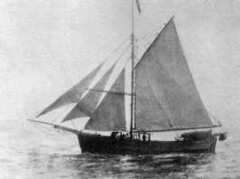
Now, I spoke to contacts at the USGS Alaska Science Center and the National Oceanic and Atmospheric Administration, and in addition to my own research, this is what we found. In 1905 (or 1906, records are confusing) Roald Amundsen sailed his vessel the Gjøa through the Northwest PassageGjøa, however he was using shallow draft boats. In other words, the Northwest Passage was not traversable by any means, but by a vessel that was smaller, lighter, and less likely to run aground on the ice.

In 1940, the St. Roch captained by Canadian RCMP officer Henry Larsen made the journey, but once again in a vessel this time designed specifically for dealing with ice. Larsen was quoted as once wondering "if we had come this far only to be crushed like a nut on a shoal and then buried by the ice."

No doubt you can get a vessel through the Northwest Passage, however whether it is “open” as it was in the summer of 07 is definitely not up to debate, and it seems nothing but a sly trick on Spencer’s part to undermine.

In conclusion Spencer, as with his colleagues in the GeoJournal issue, notes that AIT deserves high praise for its job in raising public awareness. However Spencer believes that there are “simply too many examples of irresponsible misrepresentation of science to redeem the movie.” Amusing, considering how many “irresponsible misrepresentations” there were in his article.

Another Look at An Inconvenient Truth: Part 2

Thursday, May 1st, 2008

AIT001I now feel qualified to take the next step in our look through GeoJournal’s AIT forum, having just heard back from author Eric Steig about an aspect of his entry “Another look at An Inconvenient Truth” that had me baffled.

Steig, who teaches environmental earth science, isotope geochemistry and paleoclimatology as associate professor at the Earth and Space Sciences department, University of Washington, was first off the blocks in GeoJournal’s look at the science within AIT.

As the Springer press release upon publication of this journal (they were a few months late, as the September edition was published mid-April) points out, Steig believed that Gore and AIT got the fundamental sciences right. The few minor factual errors that were made, Steig believed, did not undermine the main message of the film.

My personal copy of Steig’s paper is highlighted to all hell and back, and as such I’m going to work through it for those not lucky enough to have press credentials to acquire these articles, or the money to purchase them.

Gore’s Fundamentals OK

Steig opened up pointing to the question that he would attempt to answer; does AIT accurately portray the science of climate change.

A writer at RealClimate.org, Steig has already gone on record as being in the affirmative column for this question, and noted in his review that “for the most part … Gore gets the science right.” Stepping in to this journal entry though, and having watched the movie three times, Steig once again qualifies that opinion by saying that “there are certainly aspects of the scientific content of the film that could be improved.”

Steig disclaimers anything he will say though with reiterating that Gore got the fundamentals correct. “The increase of greenhouse gases in Earth’s atmosphere … is relentless. The direct impact of increasing greenhouse gases is to warm the planet’s surface. Feedbacks … make it very likely that the amount of warming wil be greater than the direct effect from greenhouse gases alone.”

Explanatory Interlude

My job here at Blog Mongabay is to bring a measure of layman’s understanding to a topic that is, at its very core, oh so very not lay. This is not elitism on my part, as I spend many hours scouring the internet and reading information to condense and accurately portray what the scientists are saying.

I have for a long time believed that, as Quiring hints at, scientific papers do not do a good enough job of enlightening the everyday Joe or Jo. They are intent on putting their information out there without qualification, and are surprised when they are not automatically flocked too with thankful and happy converts.

As such, there are several scientific terms that bear explaining that are frequently used throughout Steig’s article.

The first is “sea ice albedo.” That Microsoft Word doesn’t recognize the word albedo is no surprise. Albedo is the extent to which an object diffusely reflects the sunlight, or, the extent to which an object reflects the light at a number of different angles. So, when attached to the words “sea ice,” this naturally refers to sea ice’s ability to reflect sun rays, which subsequently diminishes the amount of heat affecting our planet.

Factual Errors

300px-Kibo_summit_of_Mt_Kilimanjaro_001There is a point within the movie where Gore shows a number of images of glaciers, including glaciers atop Mount Kilimanjaro and the Columbia Glacier in Alaska. Steig points out that, “while both have retreated dramatically … in neither case is temperature change likely to be the culprit.”

“In the case of Kilimanjaro … changes in precipitation and … changes in cloud cover have altered the ratio of precipitation to sublimation that determines whether Kilimanjaro’s glaciers grow or shrink.” This evidence is credited to Dr. Thomas Mölg and D.R. Hardy, in an article written for the University of Innsbruck’s Geographie Innsbruck publication (PDF).

Within, Mölg and Hardy explain the marked difference in surface ablation on Kilimanjaro’s surface as a result of surface albedo, which depends upon precipitation amount and frequency.

Another example is Gore’s statement that you can visibly see the effect that the United States Clean Air Act has had on ice cores in Antarctica. According to Steig “one can neither see, nor even detect using sensitive chemical methods” any evidence in Antarctica of the Clean Air Act. Steig once again points to outside sources, this time, Michel R. Legrand and Séverine Kirchner, who wrote a paper for the Journal of Geophysical Research back in 1990 looking at the origins of nitrogen oxide at the South Pole. Their conclusion was that “…NOx production in the upper stratosphere, mesosphere, and thermosphere does not contribute significantly to the antarctic NO3 budget.”

Steig notes however that the “general points” that Gore is attempting to make in these examples are not in dispute. “Mountain glaciers are in retreat worldwide … likewise … changes in U.S. atmospheric … are clearly recorded in ice core records from Greenland.”

Misleading

235px-Hurricane_Katrina_August_28_2005_NASAIf you have followed the criticism’s laid at feet of AIT and Al Gore at all, you will have no doubt come across the fact that Hurricane Katrina should not be the poster child of Gore’s case. Steig notes that, “as scientists are fond of pointing out, no single weather event can be attributed to global climate change.” In other words, it is only the “likelihood of such events occurring” that can be pinned on the door of climate change.

This is where Steig becomes a little too apologetic for my tastes. He seems to go out of his way to ensure that Gore is not painted in a bad light. He points to the “supplemental material supplied with the DVD of the film” as a way out for Gore, when this seems not to be the point of the paper. With all due respect, it seems to me that the majority of people have seen the movie, not bought the DVD, let along poured over the extra features.

So while Gore does somewhat make up for his misleading interpretation of Hurricane Katrina’s relation to climate change, he does it only in the supplemental material and thus, AIT itself seems to stray away from scientific accuracy in this case.

Another misstep that Gore takes is his treatment of sea level rise. In a statement that has been reiterated by doomsday reporters and environmental alarmists, Gore notes that the planet’s sea level could rise by up to 20 feet if the West Antarctic or Greenland ice sheets melted. While this is entirely accurate, what Gore fails to note is that this is unlikely to happen anytime soon. What he should have made clear is that conventional scientific wisdom puts the timescale of this likelihood taking place over hundreds or thousands of years.

Steig does rightfully reprimand Gore for this, and he adds that Gore could have pointed out that we do have a serious misunderstanding of just what is going on in our polar ice sheets. Recent changes in Greenland’s glaciers may in fact result in a glacial collapse earlier than was first predicted.

Not So Simple…

All of this being said Steig reserved his chief criticism for Gore’s handling of the science for the end. Steig points to the almost famous scene, where Gore lifts himself above the crowds on a scissor lift to follow the rising carbon dioxide levels. What he leaves unsaid is that the temperature will follow suit, rising dramatically as CO2 levels do.

Now, for the sake of brevity, Steig does not go in to much detail about this. Gore makes an unspoken link between the carbon dioxide levels found in the ice core records, and global temperatures. However, as many scientists will hasten to tell you, this correlative link is not as clean cut as Gore alludes.

As mentioned, Steig is also known for his writing at RealClimate.org. It is here that his first review of AIT is shown, as well as a much longer look in to why the link between ice core records of carbon dioxide levels in Antarctica, and global temperature levels, is not as simple as it looks.

To match Steig’s brevity, I will simply summarize his position by saying that science has depicted a lag between the rise of carbon dioxide levels and temperature levels rising; it isn’t the hand-in-hand relationship that Al Gore leads us to believe it is. However, as Steig writes in his article at Real Climate, “CO2 acts as an amplifier” of the temperature. In other words, an increase in CO2 levels will inevitably push the temperature further, though maybe not immediately.

epicagore

Conclusion: Mine and His

Steig sums it up simple; “An Inconvenient Truth rests on a solid scientific foundation.” However Steig provides an escape clause for Gore and his movie by adding that AIT was not supposed to be a scientific movie, but a movie of bringing people to awareness and action. As such, Steig seems to negate the necessity for actual scientific fact, in place of activism. And while for the most part, this can work in the favor of science, to ignore the science completely is unwise.

That is where people like me step in. I’m well aware that not everyone wants to know just what has caused global warming. Most of you just want it to stop, or at least, to leave you with swimming days in winter. But there are those who want to look further than just what they are being told by celebrities and the media, and that is why myself, websites like Mongabay and Real Climate, and others, all come in to the picture.