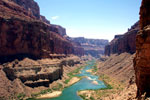
A new series of 11 films looks back on the last 50 years of history in the Monteverde cloud forest in Costa Rica, and looks forward to the future.
According to Monteverde Now website: “‘Monteverde Now’ gives you access to place where change cannot be ignored-Costa Rica’s Monteverde Cloud Forest. It is a collection of 11 short films about people who live and work in one of our planet’s most diverse and delicate ecosystems. Wherever you live, these stories will give you new perspective on the rapidly changing relationship between people and the planet.”
Like the American bison or the passenger pigeon the radiated tortoise (Astrochelys radiata) has gone from super-abundant to nearly extinct. The species could be gone by 2030 warn researchers. Photo by Robert Walker.
Once one of the world’s most abundant tortoises, numbering in the millions, Madagascar’s radiated tortoise is on the very brink of extinction. Killed for their meat by one of the world’s most impoverished people, new surveys last month by the Turtle Survival Alliance (TSA), The Orianne Society, and Nautilus Ecology have further confirmed the precipitous decline of this once common reptile.
“Traditionally, tortoise meat was served on special occasions, but now it is eaten on a daily basis. Hundreds of pieces of discarded tortoise shells litter the sidewalks in some communities. This staggering level of consumption is not sustainable,” explains Dr. Christina Castellano, Director of Turtle Conservation at The Orianne Society in a press release.
Armed poaching gangs are causing “the systematic extermination of this species” says Ryan Walker, a biologist with Nautilus Ecology.
Tortoise meat being prepared for sale in a poaching camp. Photo courtesy of The Orianne Society.
Radiated Tortoise shells litter the ground in the town of Tsiombe. Photo courtesy of The Orianne Society.
For more information on the demise of the radiated tortoise:
(04/05/2010) The radiated tortoise, once common throughout Madagascar, faces extinction within the next 20 years due to poaching for its meat and the illegal pet trade, according to biologists with the Turtle Survival Alliance (TSA) and the Wildlife Conservation Society (WCS). Returning from field surveys in southern Madagascar’s spiny forest, they found regions without a single turtle. Locals said that armed bands of poachers were taking truckloads of tortoises to be sold in meat markets. The tortoise is also popular in the underground pet trade, although it is protected by CITES (Convention on International Trade in Endangered Species).
Hand-feeding a sick Hyloscirtus colymba tree frog.
The Panama Amphibian Rescue and Conservation Project is racing to save amphibians as the deadly chytrid fungus spreads down Central America. The disease is presently between Panama City and Colon.
Juvenile Atelopus certus.
Pristimantis species.
Undescribed Pristimantis species.
Juvenile Atelopus certus.
Atelopus limosus.
More photos to come. All photos by Rhett A. Butler
Sustainable designer Neil Chambers, author of “Urban Green: Architecture for the Future,” made the case for using natural systems to clean and manage water at a conference organized by The Economist. In Myrtle Beach, South Carolina, beach tourism had been negatively impacted by heavy water pollution. Instead of re-engineering the man-made water systems, Chambers decided to use “oyster-tecture.” In one instance of putting innovative ideas into practice, oyster reefs were built to restore the ecological health of the Withers Estuary and its surrounding areas.
Chambers outlined the multi-faceted South Carolina project, which uses an ecosystem-services approach in an innovative and low-cost manner. Formally, the project, which involved federal, state, and local governments, along with local organizations and residents, aimed at improving the water quality of Withers Estuary, Withers Swash, and its connection to the Atlantic Ocean; addressing soil and other contamination throughout the estuary and adjacent areas; and dealing with the severe ecological degradation among the eco-zones of the estuary.
Working with a team of volunteers, he led an effort that involved strategically building oyster reefs at the Withers Swash. All volunteer labor helped keep the total cost of the project to around $3,000. Some 15 reefs were constructed at a cost of $200 each, creating homes for 50,000 oysters. In this form of oyster-tecture, these (unedible) oyster are purifying more than 1.2 million gallons of water each day, restoring the health of the water reaching the beach downstream.
Other components include instituting a water quality monitoring program, establishing guidelines for re-engineering drainage into the watershed, developing ecological approaches for development along the beach, and partnering with the city to preserve the long-term ecological value of the beach.
More broadly, Chambers also calls for a return to nature when dealing with pressing water conservation issues, an approach many landscape architects would also support. For example, he believes Las Vegas is just continuing to use the outmoded approach people have been using for two thousand years: piping water far distances. Chambers explained that water infrastructure is the number one consumer of energy in any city. It takes a lot of energy to pump and convey water through those pipes all the way to homes. As a result, engineered water systems also creates water and air pollution. Instead, natural riverine systems should be allowed to transfer water. “Nature is not straight, but curves.” Calling for restoring habitats and using natural functions to solve our problems, he proposed “un-engineering systems. We need ecological not technological solutions.”
Also worth checking out is a TED talk by Katherine Orff, ASLA, a landscape architect who proposes using oysters to revive New York’s rivers. Her concept was featured in the Museum of Modern Art’s “Rising Currents” exhibition, which explored ideas for using natural systems to protect New York City’s coastline from the sea level rise expected with climate change.
Image credit: Withers Estuary Community Collaborative project / Neil Chambers
A three-week old baby white-naped mangabey (Cercocebus atys lunulatus) has been named ‘Hope’ given that her species is vanishing from the wild. Photo by: James Godwin, ZSL.
Born at the Zoological Society of London’s (ZSL) London Zoo, this white-naped mangabey (Cercocebus atys lunulatus) represents one of the Africa’s most imperiled monkeys and is apart of the European Endangered species Programme (EEP). The white-naped mangabey is listed as Endangered by the IUCN Red List and is a subspecies of the sooty mangabey (Cercocebus atys). Native to West Africa, Hope’s wild relatives are threatened by deforestation and bushmeat hunting. Researchers believe the population has been cut in half in the past 30 years.
A five-month old orphaned sun bear, Natalie, at the Bornean Sun Bear Conservation Center explores the trees.
The sun bear (Ursus malayanus) is listed as Vulnerable by the IUCN Red List. It is threatened by deforestation, the illegal pet trade, poaching, and the trade for traditional Chinese medicine.
No, this is not photoshopped: this month-old Egyptian tortoise (Testudo kleinmanni) is actually dwarfed by a grape.
A new resident of the Zoological Society of London’s (ZSL) Whipsnade Zoo, Bedfordshire, the tortoise is the offspring of a group of tortoises seized by customs last year as a sting on the illegal pet trade. The tiny tortoise pictured weighs 0.2 ounces (6 grams), but within a decade will weigh nearly hundred times that much at 1.1 pounds (500 grams). They are the smallest tortoise in the northern hemisphere, unfortunately the Egyptian tortoise is also one of the world’s most threatened. Listed as Critically Endangered by the IUCN Red List, the tortoise faces agricultural and industrial pressures, but has actually been decimated by the pet trade, which is now illegal. Only a few thousand survive today in the wild. Photo courtesy of ZSL
A close-up of tortoise v. grape. Photo courtesy of ZSL.
Mongabay.com seeks to raise interest in and appreciation of wild lands and wildlife, while examining the impact of emerging trends in climate, technology, economics, and finance on conservation and development.
Carbon dioxide gas emissions generated from mongabay.com operations (server, data transfer, travel) are mitigated through an association with Anthrotect, an organization working with Afro-indigenous and Embera communities to protect forests in Colombia's Darien region. Anthrotect is protecting the habitat of mongabay's mascot: the scale-crested pygmy tyrant.